The 3 AM Problem: What Happens When Your Night Shift Can't Find the Right SOP
2026-05-30
Your day shift has managers who know the process. Your night shift has a WhatsApp group and a prayer. Here's what really happens at 3 AM when something goes wrong and the SOP is locked in someone's desk drawer.
The 3 AM Problem: What Happens When Your Night Shift Can't Find the Right SOP
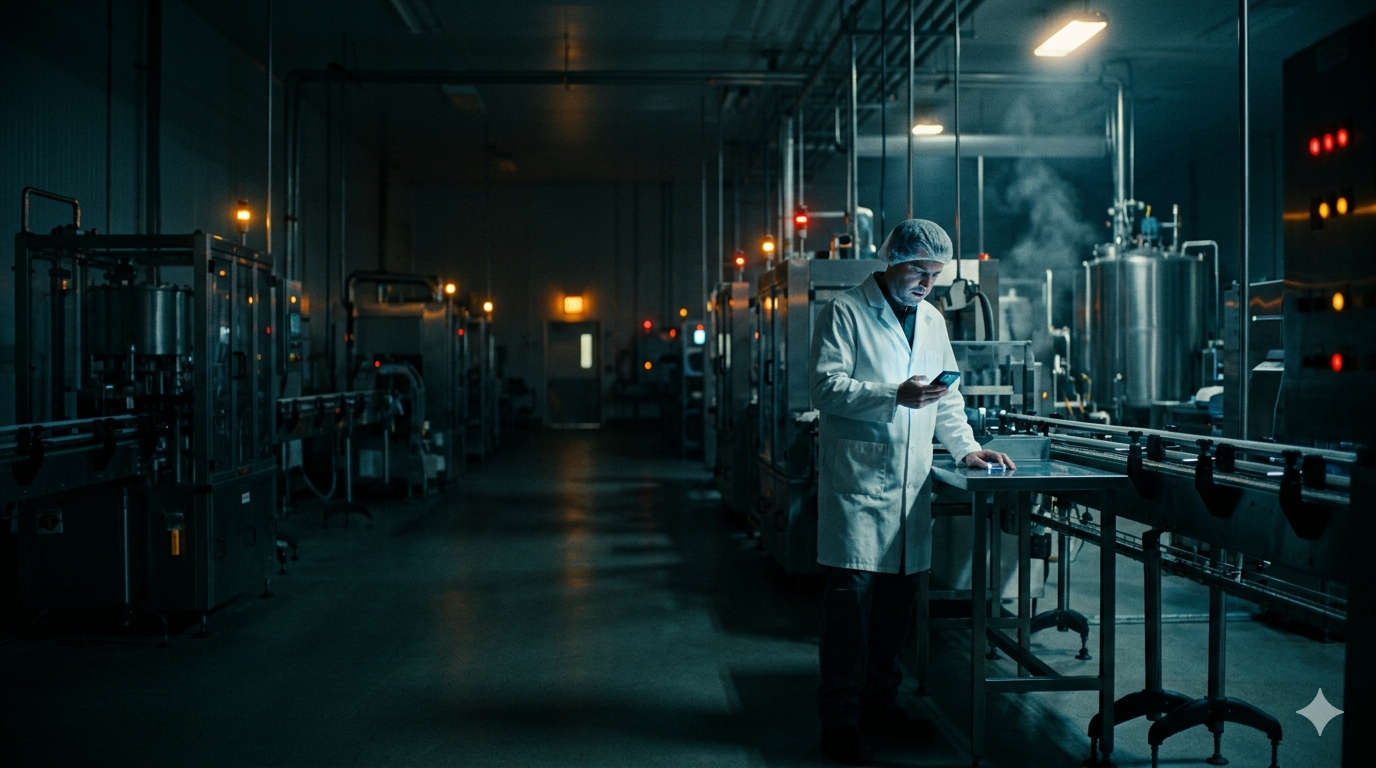
It's 3 AM. The packing line just stopped.
The operator knows something is wrong with the tablet coating. The thickness looks off. There's a procedure for this — he's seen the production manager follow it during the day shift. Adjust the spray rate, check the inlet temperature, wait 15 minutes, measure again.
But the production manager is asleep. The procedure is in a binder on his desk. The desk is locked.
So the operator does what every night shift operator does: he calls someone. Or texts the WhatsApp group. Or makes his best guess.
This is the 3 AM problem. And every factory has it.
Why Night Shifts Are Flying Blind
During the day, institutional knowledge walks around in human form. The production manager knows the coating procedure. The QC head knows the sampling protocol. The plant head knows which deviations need escalation.
At night, all that knowledge goes home.
What stays behind:
- Paper SOPs in locked offices — procedures exist, but they're physically inaccessible
- Tribal knowledge in senior heads — "Ask Sharma ji" doesn't work at 3 AM
- WhatsApp groups with 200 unread messages — good luck finding the right procedure in a chat history
- Fear of making the wrong decision — so the operator does nothing and waits for the morning shift
The result: production stops, batches get delayed, quality incidents happen at night and get discovered in the morning, and nobody can trace what went wrong because nobody documented the 3 AM decision.
The Real Cost
A pharmaceutical company we work with tracked their deviation reports by shift. The numbers were striking:
- 68% of deviations originated during the night shift — not because night shift workers were less skilled, but because they had less access to procedures and less authority to act
- Average resolution time for night shift issues: 14 hours — because the issue was discovered at 3 AM, reported at 7 AM, investigated at 10 AM, and resolved by 5 PM
- Same issue during day shift: 2 hours — because the right person was standing right there
The gap isn't competence. It's access.
What Digital SOPs Actually Change
When SOPs are digital and accessible from any device, the 3 AM scenario changes completely:
The operator opens the SOP on their phone
No locked offices. No binders. The coating adjustment procedure is searchable, versioned, and available at 3 AM just like it is at 3 PM.
The procedure tells them exactly what to do
Step 1: Check inlet temperature (should be 45-50 degrees). Step 2: Reduce spray rate to 8 mL/min. Step 3: Wait 15 minutes. Step 4: Measure coating thickness. Step 5: If still off, escalate to shift supervisor.
No guessing. No WhatsApp. No waiting for morning.
Every action is logged automatically
When the operator follows the digital SOP, each step is timestamped. The morning shift can see exactly what happened at 3 AM — what was checked, what was adjusted, who did it, and when.
Escalation happens instantly
If the procedure requires supervisor approval, the digital SOP routes it to the on-call supervisor — not to a WhatsApp group where it gets buried under good morning messages.
Beyond SOPs: The Night Shift Dashboard
The best-run factories give their night shifts more than just procedures. They give them visibility:
- What's pending right now — which batches are in progress, which are waiting for QC, which are stuck
- What's due before morning — dispatch deadlines, testing timelines, handover items
- Who to contact for what — not a general WhatsApp group, but the specific escalation path for each type of issue
- What happened in the last shift — context from the evening shift handover, any known issues, any machines under maintenance
This dashboard doesn't need to be complex. It needs to be accessible, current, and honest about what's working and what isn't.
The Shift Handover Problem
Digital SOPs also solve the handover problem. In most factories, shift handover is either:
- A logbook that nobody reads until something goes wrong
- A verbal handover that loses details with each retelling
- Nothing — the next shift discovers the current state by walking around and asking
With a digital system, the handover is automatic:
- Open items carry forward with their full history
- Pending approvals show up in the next shift supervisor's queue
- Deviations opened at 3 AM are visible to the QC head at 7 AM with full context
- Nothing falls through the crack between shifts
Implementation: Simpler Than You Think
You don't need to digitize every procedure at once. Start with the night shift's top 5 pain points:
1. The procedures they actually need at night — coating adjustments, equipment troubleshooting, deviation reporting. Start with 5-10 critical SOPs.
2. A way to report deviations digitally — instead of writing in a logbook that gets read 6 hours later
3. An escalation path that works at 3 AM — route to the right person, not a group chat
4. A shift handover template — structured, not free-form, with mandatory fields for pending items
5. Access from any device — the operator's phone is good enough. Don't wait for tablets on every line.
The goal isn't perfection. It's making the night shift 80% as effective as the day shift. Right now, most factories are at 40%.
The Test
Here's a simple test for your factory:
At 3 AM tonight, can your night shift operator:
- [ ] Find the SOP for the most common equipment issue on their line?
- [ ] Report a deviation and have it reach the right person before morning?
- [ ] See what's pending and what's due before the next shift arrives?
- [ ] Know who to call for a quality decision, without checking WhatsApp?
If you checked fewer than 3 boxes, your night shift is flying blind. And the 3 AM problem is costing you more than you think.
Flobri makes every SOP accessible from any device, routes approvals to the right person at any hour, and gives every shift the same visibility. No more locked binders. No more WhatsApp procedures. See how it works →