Why Factory Workers Won't Use Your Software (And the Fix)
2026-05-15
Shop-floor software adoption fails because it's built for managers, not operators. Why workers resist it — and what a worker-friendly factory app looks like.
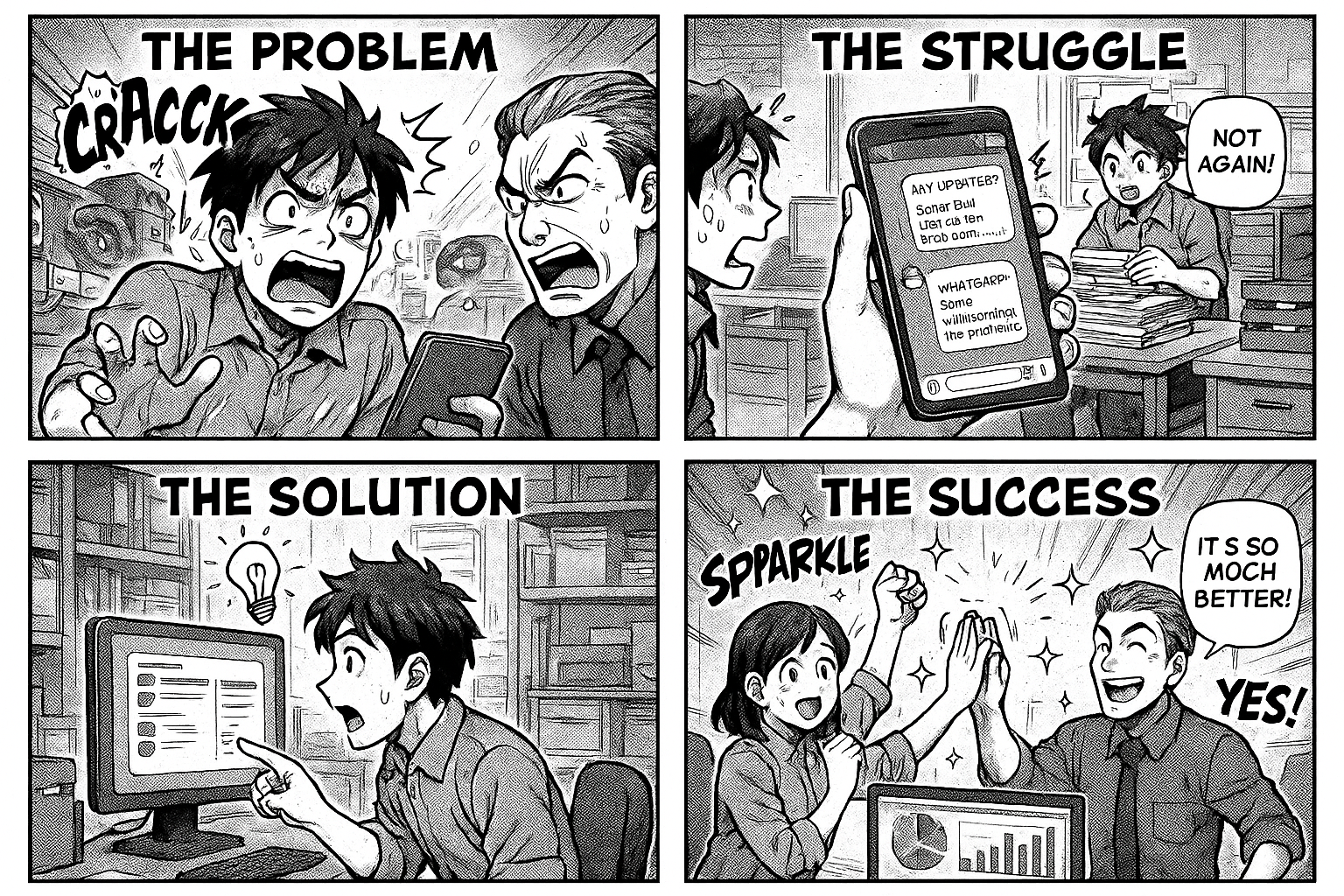
Why Your Factory Floor Workers Hate Your Current Software — And What to Do About It
You spent months evaluating ERP systems. You negotiated pricing, sat through demos, signed the contract. Six months later, your operators are still entering data on paper and handing it to someone who types it into the system.
Sound familiar?
The Adoption Gap Nobody Talks About
Here's the uncomfortable truth: most manufacturing software is built for managers, not for the people who actually use it. The dashboards look great in the boardroom demo. But on the factory floor at 2 AM, when an operator needs to log a batch parameter, they're staring at a screen with 47 fields, half of which don't apply to them.
The result? They skip it. They write it on paper. They tell someone later. And your expensive system becomes an expensive data entry job for someone in the back office.
The Five Reasons Workers Resist
1. Too Many Clicks to Do One Thing
An operator needs to record a temperature reading. In most ERP systems, that means: log in → navigate to the right module → find the right batch → find the right parameter → enter the value → save. Six steps for a 3-second job.
What workers want: Open the app, see their current task, type the number, done.
2. Desktop-Only in a Walking-Around Job
Factory workers don't sit at desks. They move between machines, check equipment, handle materials. If the system only works on a desktop PC bolted to a wall, they'll avoid it until the end of their shift — then try to remember everything they did.
What workers want: A phone or tablet they carry with them.
3. The System Asks Questions They Can't Answer
Mandatory fields that don't apply. Dropdown menus with 200 options. Forms designed by someone who has never stood on a production line.
What workers want: Only see the fields that matter for their specific stage of work.
4. No Feedback, No Motivation
They enter data into a black hole. No acknowledgment, no progress indicator, no sense of completion. Why would anyone stay motivated?
What workers want: A clear sense of "here's what you've done, here's what's next."
5. They Weren't Part of the Decision
The system was chosen by IT and management. Nobody asked the shift supervisor what they need. The system solves management's reporting problem, not the worker's daily workflow problem.
What Worker-Friendly Software Actually Looks Like
The best manufacturing software doesn't feel like software at all. It feels like a checklist:
- Stage-based: Workers see only their current stage. A QC inspector sees QC fields. A packing operator sees packing fields. No navigating through modules.
- Mobile-first: Works on any phone browser. No app download, no IT department needed.
- Progressive disclosure: Start with the essentials. Show advanced fields only when relevant.
- Instant transitions: Tap "Submit" and it moves to the next person automatically. No routing, no email, no WhatsApp message saying "please check."
- Works offline: If the WiFi drops (and it will), the app queues entries and syncs when connectivity returns.
The Real Cost of Bad Adoption
When workers bypass the system, you lose more than data:
- Compliance gaps: Missing batch records during an audit
- Delayed decisions: Managers see yesterday's data, not today's
- Double work: Paper entry + data entry = two people doing one job
- Quality blind spots: Deviations caught hours or days late instead of in real-time
How to Fix It Without Starting Over
You don't need to replace your entire system. Start with one process:
1. Pick your most painful workflow — the one with the most paper, the most complaints, the most errors
2. Map it as stages — who does what, in what order
3. Build it as a simple flow — each stage shows only the fields that person needs
4. Put it on phones — let workers access it from anywhere on the floor
5. Measure adoption — if people use it without being told to, you've won
The Bottom Line
Software adoption isn't a training problem. It's a design problem. The moment your system is easier than paper, people will use it voluntarily.
Stop blaming your workers for not adopting your software. Start building software that deserves to be adopted.
Flobri is built for the factory floor — stage-based workflows that show each person only what they need, accessible from any phone. Try it free →