How to Track and Manage a Field Sales Team (Without Micromanaging)
2026-06-07
How to track and manage a field sales team: log activity and physical visits, measure funnel conversion per rep, spot customers going cold, and separate rep-sourced from repeat revenue — without micromanaging.
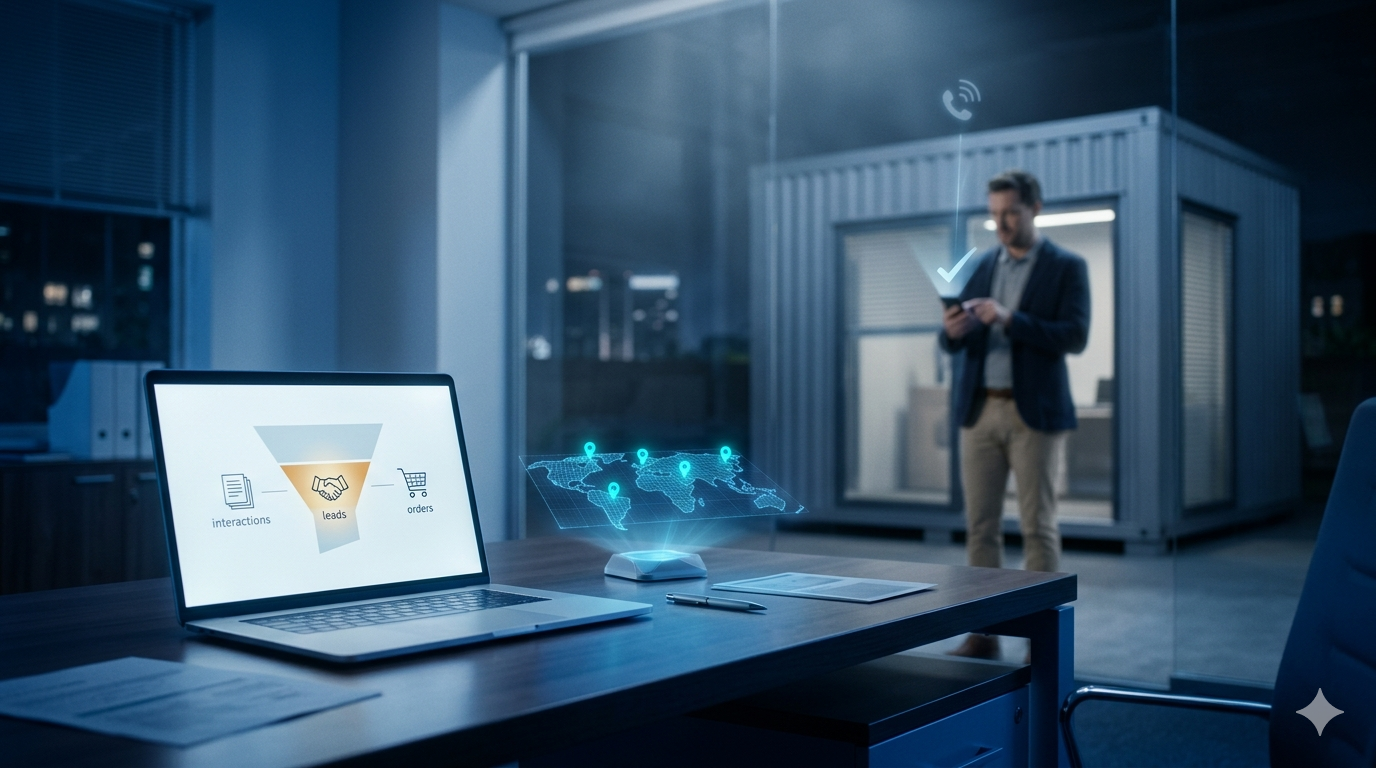
Ask most owners how their field sales team is doing and you get a feeling, not a number. "Aadil's strong." "The Paonta guys are busy." Then the month closes and the orders don't match the busyness — and nobody can say exactly where the deals slipped.
The problem isn't the people. It's that field sales happens out of sight — visits, calls, follow-ups, quotations — and by the time it lands in a system, it's a closed order or a lost lead with no story attached. This guide is about how to track and manage a field sales team so you can see the work, coach on the gaps, and stop being surprised at month-end — without standing over anyone's shoulder.
Why field sales is so hard to see
A factory floor leaves evidence — output, batches, dispatches. A salesperson's day mostly doesn't. The visit happened or it didn't; the follow-up call was made or forgotten; the customer is warm or quietly going cold. WhatsApp updates and a shared Excel sheet capture almost none of it, and what they do capture nobody trusts.
So managers fall back on the two things they can see — orders that came in, and how busy people seem. Both are misleading. Orders are a lagging result of work done weeks ago. And busyness, it turns out, has almost nothing to do with results.
Track activity — but never confuse it with outcome
The single most useful lesson from looking at real sales data: more activity does not mean more sales. We've seen it cleanly — one rep closing the most deals with half the field visits of his peers (he qualifies hard and closes by phone), while others did twice the in-person meetings and converted at a third of his rate.
If you'd ranked that team by activity, you'd have promoted the wrong person.
So track activity — but as an input, not a scorecard:
- Interactions — every touch: visit, call, WhatsApp, email.
- Physical meetings — count in-person visits separately. They're expensive (travel, time), so you want to know they're converting, not just happening.
- Mode mix — a rep doing 90% cold calls is running a different motion than one doing 90% visits. Neither is wrong; both should be deliberate.
The metric that actually matters: conversion through the funnel
Activity becomes meaningful only when you follow it through the funnel:
   Interactions  ──►  Leads  ──►  POs Won
                26%          37%
Those gates are where the truth lives. A rep with great activity but a weak interaction→lead rate isn't talking to the right customers. A rep with strong leads but a weak lead→PO rate is sourcing interest but not closing. Same headcount, two completely different coaching conversations — and you can only have them if you can see each gate per person.
This is why a shared dashboard beats a daily stand-up: the numbers are already there, so the meeting is about why, not what.
Watch for customers going cold
The other thing field teams quietly lose is existing relationships. A customer who ordered for two years gets visited less, then phoned less, then forgotten — until a competitor shows up. It rarely announces itself; it just drifts.
The fix is a simple, brutal report: every customer, sorted by days since last contact — and separately, days since last in-person visit. The two aren't the same. A customer phoned last week but not visited in eight months isn't "cold," but they are visit-lapsed — and for high-value accounts that's a re-visit waiting to happen. Surfacing the lapsed-but-valuable accounts (ones that have ordered before and gone quiet) is one of the highest-return things a sales manager can do.
Separate what the team sourced from what just repeats
One trap when you start measuring: crediting reps with revenue they didn't drive. In most businesses, a big share of orders are repeat or direct — existing customers reordering without a fresh sales cycle. That's real revenue, but it's not new business a rep won this month.
Keep the two apart:
- Funnel value — orders that came through a rep's interaction → lead → close. This is sales performance.
- Total order value — the whole book, including repeat/direct orders.
Blend them and your best closer looks average while a rep sitting on an old account looks like a star. Separate them and you can reward the right behaviour.
How to do all this without micromanaging
The fear with sales tracking is that it becomes surveillance — and a watched team games the numbers. The way around it is to make logging cheap and the value mutual:
- Reps log an interaction in seconds, from the field, on a phone — customer, mode, a line of notes. Not a form that punishes them for working.
- Everyone sees the same dashboard — rep, manager, owner. When the rep can see their own funnel and cold list, tracking becomes a tool they use, not a cage.
- Coach on the gap, not the activity. "Your visits are high but lead conversion dropped — who are you visiting?" beats "do more visits."
Visibility given to the team is empowerment. Visibility taken from them is surveillance. Same data, opposite cultures.
How Flobri does it
Flobri models the whole sales motion as a connected workflow — interaction → lead → quotation → PO → fulfilment — that reps drive from the field and managers see live:
- Reps log interactions (visit / call / WhatsApp / email) against a customer in seconds.
- The funnel is automatic — interactions roll up to leads, leads to POs, with conversion at each gate, per rep and overall.
- Physical meetings are tracked separately, so field effort is visible and measurable.
- A "going cold" report lists customers by days since last contact and last visit, filtered per rep.
- Funnel value vs total order value are kept distinct, so reps are credited for what they actually sourced.
- Role-based views mean each executive sees their own data, while heads and owners see everyone — built in, not bolted on. (More on what leaders should see in what a CEO dashboard should actually show you.)
No spreadsheets, no CRM migration project — described in plain language and live in minutes, the way any process goes live on Flobri.
Frequently Asked Questions
What should I track for a field sales team?
Activity (interactions, with in-person visits counted separately), funnel conversion (interaction→lead→order, per rep), customer coverage (days since last contact/visit), and value — keeping rep-sourced new business separate from repeat orders.
Isn't tracking salespeople just micromanagement?
Only if the data flows one way. Make logging quick and give reps the same dashboard their manager sees, and it becomes a tool they use to manage their own pipeline. Coach on conversion gaps, not raw activity.
Why do high-activity reps sometimes underperform?
Because activity is an input, not an outcome. A rep can make many visits to the wrong customers, or generate leads they can't close. Conversion at each funnel gate — not busyness — tells you who's actually effective.
How do I spot customers we're losing?
Run a recency report: every customer sorted by days since last contact, and separately by days since last in-person visit. Lapsed high-value accounts (ones that ordered before and went quiet) are your highest-return re-engagement list.
Flobri lets you run sales — interactions, leads, quotations, orders, and fulfilment — as one connected, trackable workflow, with per-rep funnels, field-visit tracking, and a cold-customer report, built around how your team already sells. See how Flobri turns a process description into a live workflow.