Product Recall Management in Pharma: Classification, Process & Mock Recalls
2026-06-08
Product recall management in pharma: what triggers a recall, Class I/II/III classification, the recall process flowchart, mock recalls, reconciliation and traceability, and the link to complaints, deviation and CAPA (Schedule M / 21 CFR Part 7 / EU GMP Ch.8).
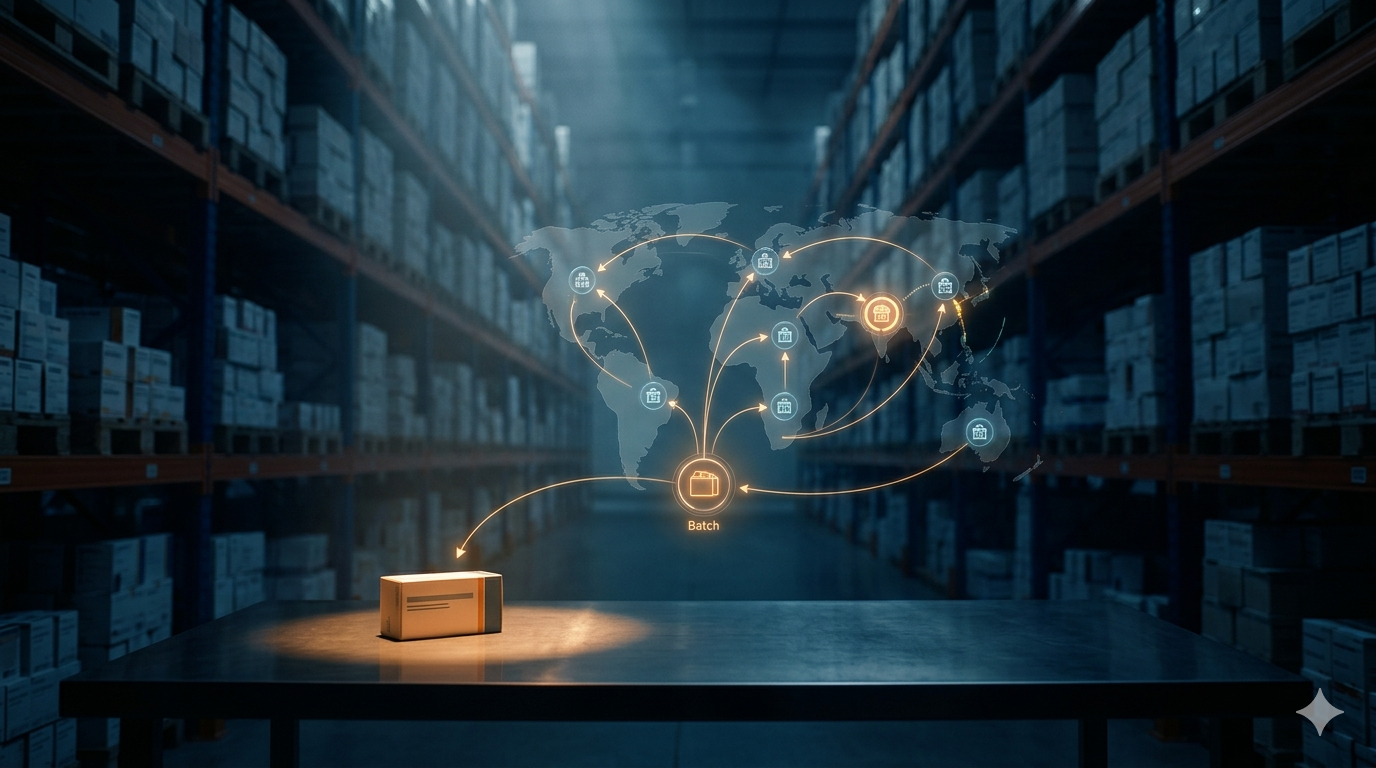
A recall is the moment a quality system is judged in public. Everything upstream — the deviation you investigated, the complaint you logged, the batch you released — leads to one question when something goes wrong: can you get the affected product back, fast, and prove it? Do it well and you protect patients and your licence. Do it badly — slow notification, no traceability, units you can't account for — and a contained problem becomes a regulatory crisis.
This guide covers product recall management in pharma end to end: what triggers a recall, how recalls are classified, the recall process flowchart, mock recalls, and how recall connects to complaints, deviations, and CAPA.
What is a product recall?
A recall is the removal or correction of a marketed product that violates the law or its marketing authorisation, or that may be unsafe. It can be:
- Voluntary — initiated by the manufacturer (most recalls).
- Mandated — ordered by a regulator (CDSCO, FDA) when a firm won't act.
Recalls also have a depth — how far down the chain you retrieve: wholesale level, retail/pharmacy level, or all the way to the patient (consumer level). The classification of the defect decides how deep and how fast you go.
What triggers a recall
A recall rarely appears from nowhere. It's the escalation of another quality event:
- A confirmed market complaint revealing a defect that reaches patients.
- An OOS result or stability failure on a batch already distributed.
- A deviation whose impact assessment finds released product is affected.
- A regulatory action, an inspection finding, or a supplier alert.
Which is why recall readiness isn't a standalone procedure — it's the end of a chain that runs through your whole quality system.
Recall classification: Class I, II, III
Regulators classify recalls by the health risk, and that classification sets urgency:
- Class I — a reasonable probability that the product will cause serious harm or death. Example: wrong active ingredient, sterility failure in an injectable, dangerous contamination. Fastest action, deepest retrieval (often to patient level), public notification.
- Class II — may cause temporary or medically reversible harm, with a remote probability of serious harm. Example: a sub-potent batch, a significant labelling error.
- Class III — unlikely to cause harm but violates regulations. Example: minor labelling or packaging defects, cosmetic issues.
Under-classifying a Class I event is among the most dangerous mistakes a quality system can make.
The recall process flowchart
  +------------------------------------------------+
  |  Trigger: complaint / OOS / deviation / regulator |
  +-----------------------+-------------------------+
                          |
                          v
  +------------------------------------------------+
  |  Health Hazard Evaluation  (recall committee:   |
  |  QA, regulatory, production, mgmt)              |
  +-----------------------+-------------------------+
                          |
                          v
                 Recall required?
                  |                 |
                 NO                YES
                  |                 |
                  v                 v
          Document & close   Classify (I / II / III) + set depth
          (no recall)                |
                                     v
  +------------------------------------------------+
  |  Notify: regulator (within required timeline),  |
  |  distributors, wholesalers, retailers           |
  +-----------------------+-------------------------+
                          |
                          v
  +------------------------------------------------+
  |  Retrieve stock  ->  RECONCILE: qty distributed |
  |  vs returned vs accounted-for                   |
  +-----------------------+-------------------------+
                          |
                          v
  +------------------------------------------------+
  |  Effectiveness check -> destroy/quarantine ->   |
  |  CAPA -> close recall                            |
  +------------------------------------------------+
The two steps that decide whether a recall passes inspection are traceability (can you instantly list who received which batch and how much?) and reconciliation (do the numbers — dispatched, returned, in the market — add up?). A recall that can't reconcile its quantities is a recall that didn't really work.
Mock recalls: prove it before you need it
You don't want your first real recall to be the test of your system. A mock recall is a periodic drill: pick a batch, and trace it forward to every customer who received it and backward to its components — against the clock. It proves two things inspectors ask about directly:
- Speed — can you reconstruct the distribution of a batch within hours, not days?
- Completeness — does your traceability reach every link, with quantities that reconcile?
Firms typically run mock recalls at least annually. If a mock recall takes a week and the numbers don't tie out, that's a finding waiting to happen — better discovered in a drill than in a Class I emergency.
The regulations behind it
- India — Schedule M / CDSCO recall guidelines require a documented recall procedure, recall classification, and reconciliation of recalled stock.
- US FDA — 21 CFR Part 7 sets out recall classification (Class I/II/III), strategy, and effectiveness checks.
- EU GMP Chapter 8 ("Complaints, Quality Defects and Product Recalls") covers recall handling, the responsible person, and regulator notification.
- WHO GMP carries equivalent expectations referenced widely in inspections.
Why paper and email fail recalls
A recall is the worst possible process to run on ad-hoc tools, because it's executed under time pressure and scrutinised forensically afterwards:
- Traceability — distribution records scattered across invoices and spreadsheets can't be queried in minutes.
- Reconciliation — matching dispatched vs returned quantities by hand is slow and error-prone, and the gaps are exactly what inspectors probe.
- Timelines — regulator notification has a clock; an email thread doesn't prove you met it.
- Linkage — a recall should connect to its complaint, deviation, batch record, and CAPA. In email, it doesn't.
These are the same data-integrity weaknesses that turn a contained recall into a compliance failure.
How to run recalls in Flobri
Flobri models the recall as a controlled, stage-based workflow — connected to the events that trigger it and the dispatch records that make it traceable:
- Stages move each recall from trigger → hazard evaluation → classification → notification → retrieval → reconciliation → CAPA → closed, with system timestamps proving the timeline.
- Distribution traceability — link each batch to who received it and how much, so the affected list is a query, not a hunt.
- Reconciliation tracking — record quantity distributed, returned, and accounted-for, with the gap visible in real time.
- Linked records tie the recall to its complaint, deviation, OOS, batch, and CAPA.
- A complete audit trail captures who did what and when — ready for the post-recall inspection and for audit readiness generally.
- Mock recalls run as the same workflow, so your drills and your real recalls use one proven process.
The result is a recall you can execute fast and defend afterwards — because the traceability and the timeline are built into the system, not reconstructed from inboxes.
Frequently Asked Questions
What are the classes of pharmaceutical recall?
Class I (reasonable probability of serious harm or death), Class II (temporary or reversible harm, remote probability of serious harm), and Class III (unlikely to harm but violates regulations). The class sets the urgency, depth, and notification of the recall.
What is a mock recall?
A periodic drill that traces a chosen batch forward to all recipients and backward to its components, against the clock, to prove the recall system is fast and complete before a real recall tests it. Usually run at least annually.
What is recall reconciliation?
Matching the quantity of product distributed against the quantity returned and otherwise accounted for, so you know exactly how much affected product remains in the market. Unreconciled quantities are a major inspection concern.
What triggers a product recall?
A confirmed market complaint, an OOS or stability failure on distributed product, a deviation whose impact reaches released batches, or a regulatory action — escalated through a health hazard evaluation to a recall decision.
Who decides to recall a product?
A recall committee (typically QA, regulatory affairs, production, and senior management) conducts a health hazard evaluation and decides whether and how to recall, with QA owning the final decision and regulator notification.
Flobri lets pharma manufacturers run recalls, market complaints, deviations, OOS, CAPA, and batch release as connected, audit-ready workflows — with distribution traceability and reconciliation built in. See how Flobri handles pharma quality workflows.